




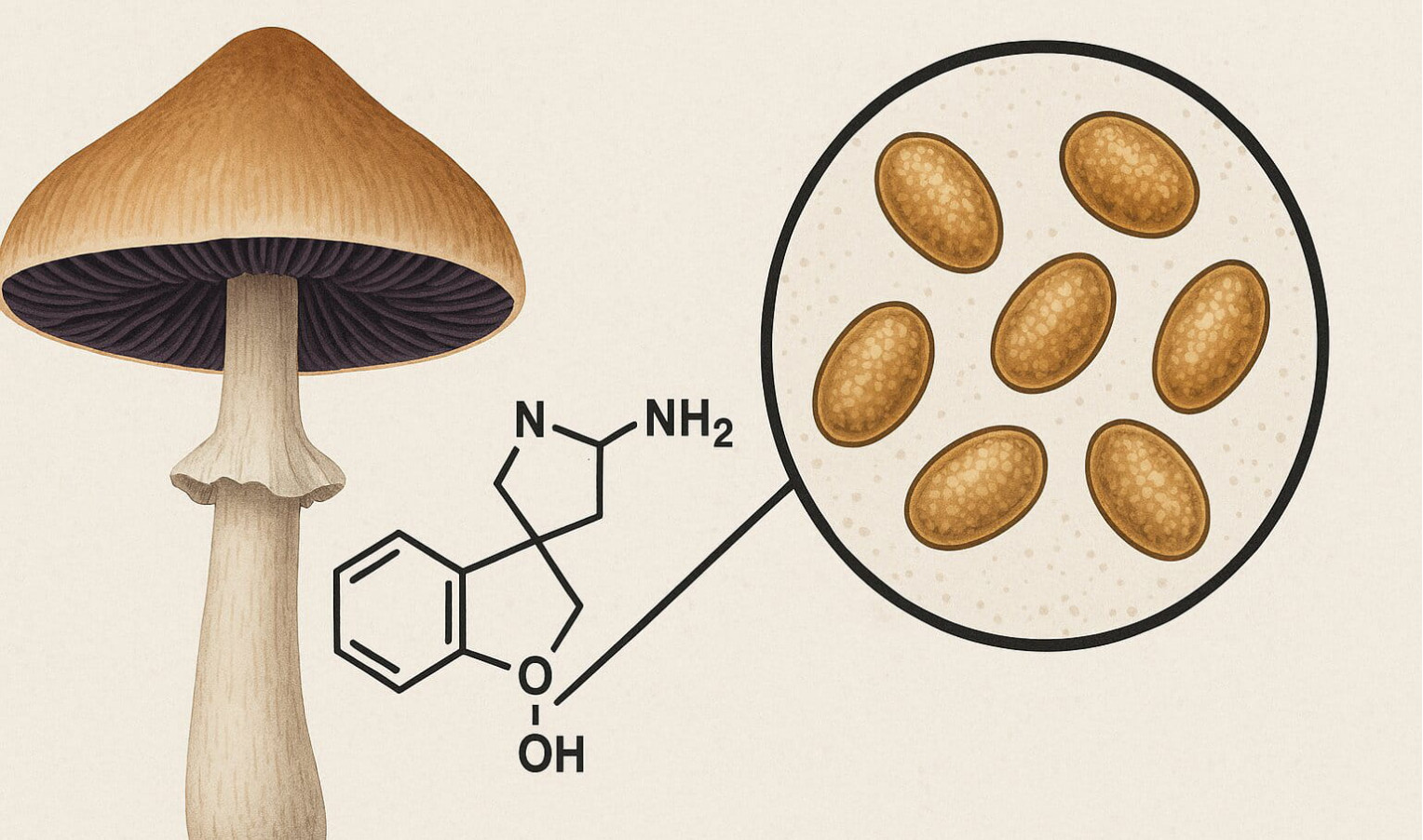
Psilocybin mushrooms have long attracted the attention of researchers and enthusiasts of psychedelic culture. Their fruiting bodies contain a substance that induces characteristic alterations in consciousness and perception.
What is psilocybin and where is it found?
Psilocybin mushrooms, often referred to as magic mushrooms or hallucinogenic mushrooms, are known for their psilocybin content. This substance is responsible for the psychoactive effects—altered perception, heightened emotions, and visual hallucinations.
However, it's important to understand that psilocybin is produced only in certain parts of the mushroom's fruiting body—the cap and stem. This is where the biosynthesis of the active substance, which causes the characteristic effect, occurs.
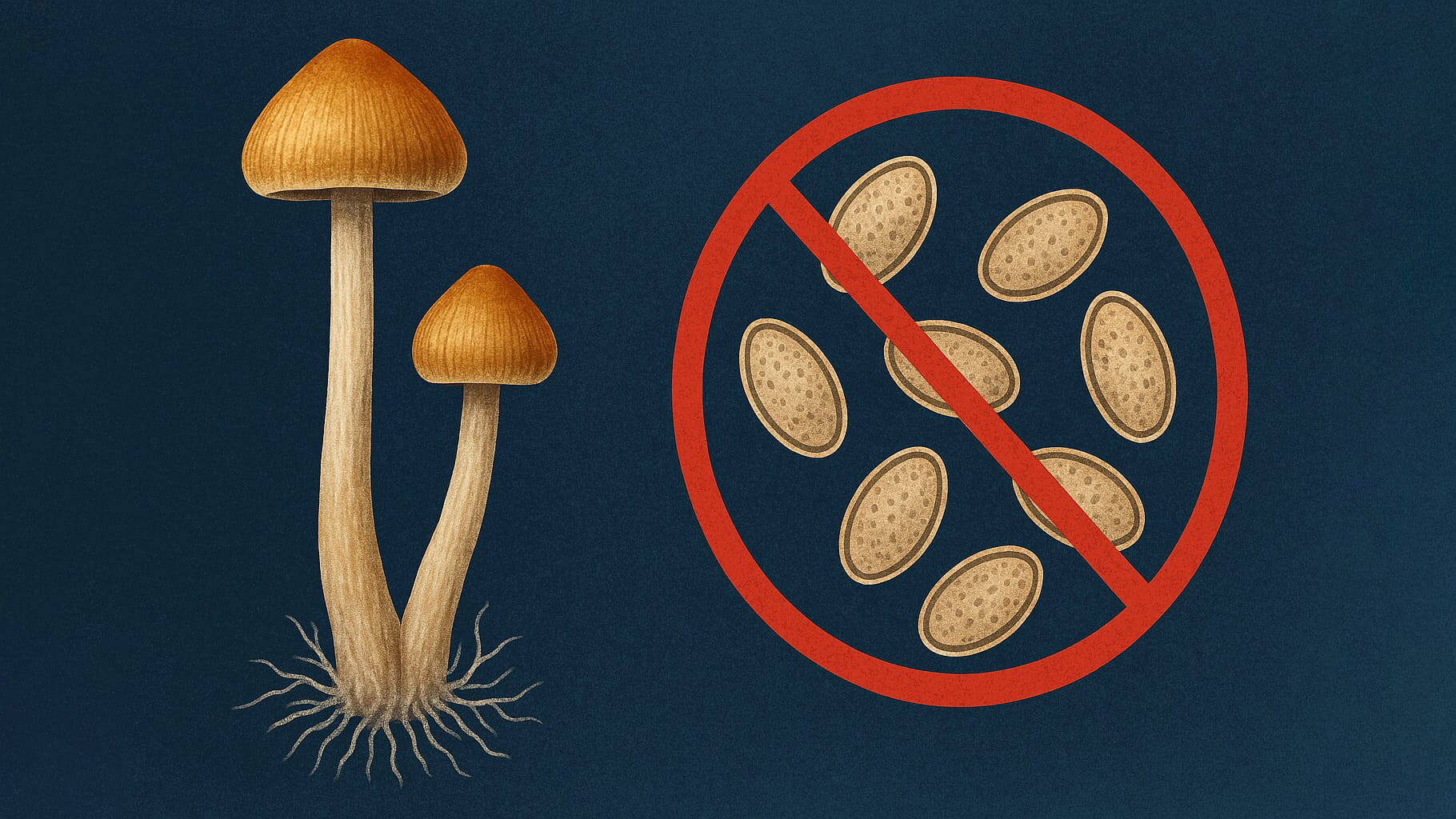
In contrast, mushroom spores are simply microscopic cells designed for reproduction. They do not participate in the synthesis of psychoactive compounds and do not contain narcotic substances. Therefore, the question "do spores contain psilocybin?" has a definitive answer: no.
An interesting detail: how do psilocybin mushroom spores differ from those of other mushrooms? Essentially, nothing—they perform the same biological function of reproduction. The only difference is that psilocybin mushroom spores can develop into mycelium, which subsequently forms fruiting bodies containing psilocybin. However, the spores themselves remain completely neutral and have no psychoactive effect.
Why mushroom spores are not psychoactive
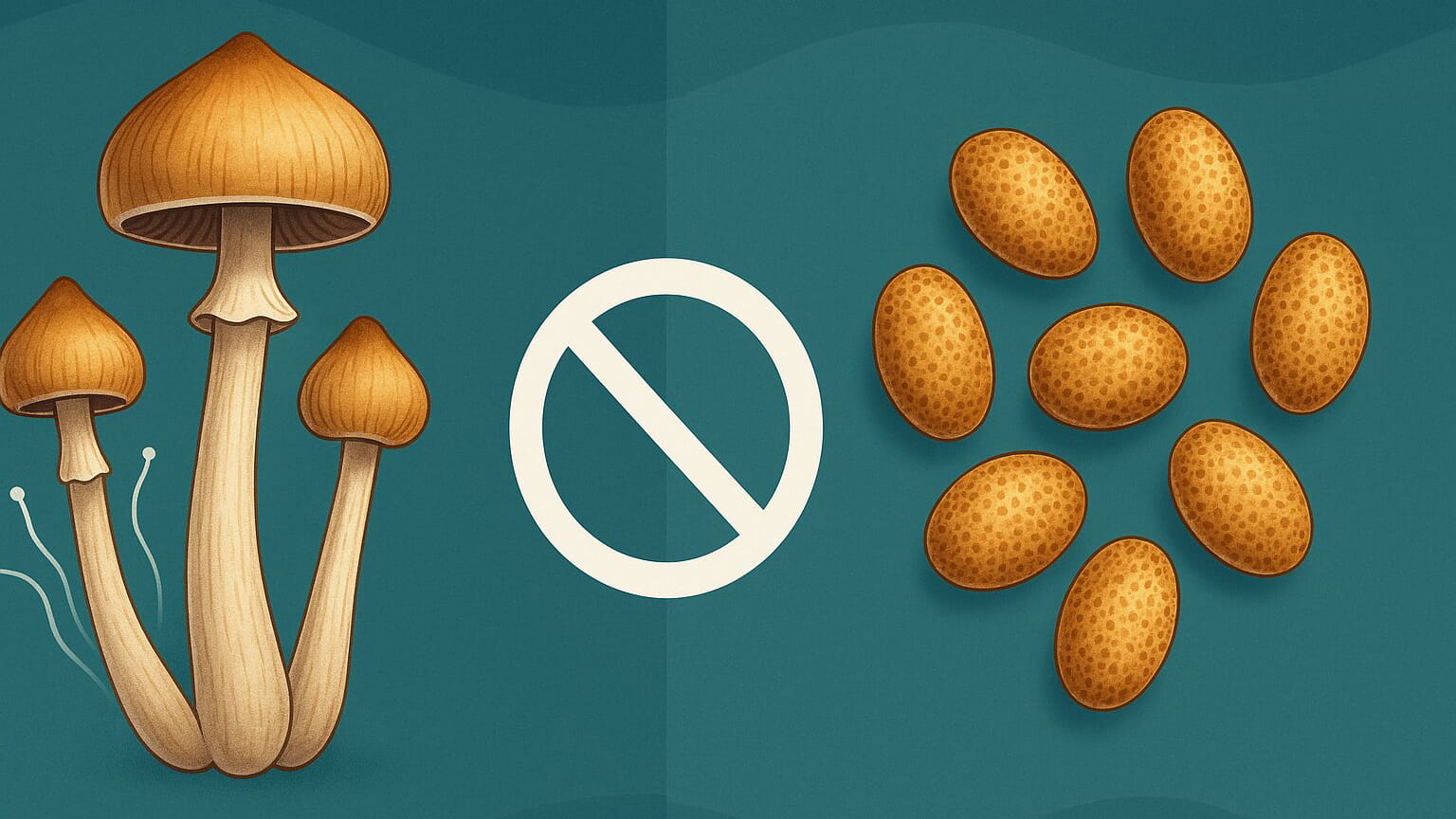
Psilocybin mushroom spores often raise questions among researchers and mycology enthusiasts. Many wonder: can you get high from the spores or do they contain narcotic substances? The answer is always the same: no. To understand why, it's important to consider several aspects:
Biological function of spores
- Spores are reproductive cells designed exclusively for reproduction.
- They are not involved in the synthesis of active substances such as psilocybin.
- Therefore, the question “why are mushroom spores not psychoactive?” is explained by their natural role—they serve as a starting point for new mycelium, but not as a source of psychoactive compounds.
Chemical composition of spores
- Unlike fruiting bodies, where the effect of psilocybin is formed, spores do not contain enzymes and biochemical pathways for its synthesis.
- So, is there psilocybin in the spores? No, it simply can't be there.
- This makes spores safe to study and legal in many countries.
Comparison of psilocybin with other psychedelics under study
- Psilocybin only works when it is metabolized in the human body, turning into psilocin.
- Unlike spores, the fruiting bodies of mushrooms contain sufficient concentrations of the substance to produce a psychoactive effect.
- When compared to other psychedelics (such as LSD or mescaline), it is clear that their active compounds are found in the substance itself, and not in the reproductive cells.
Therefore, psilocybin mushroom spores cannot cause hallucinations or changes in consciousness, since they lack the active component.
What is the difference between spores and fungi?
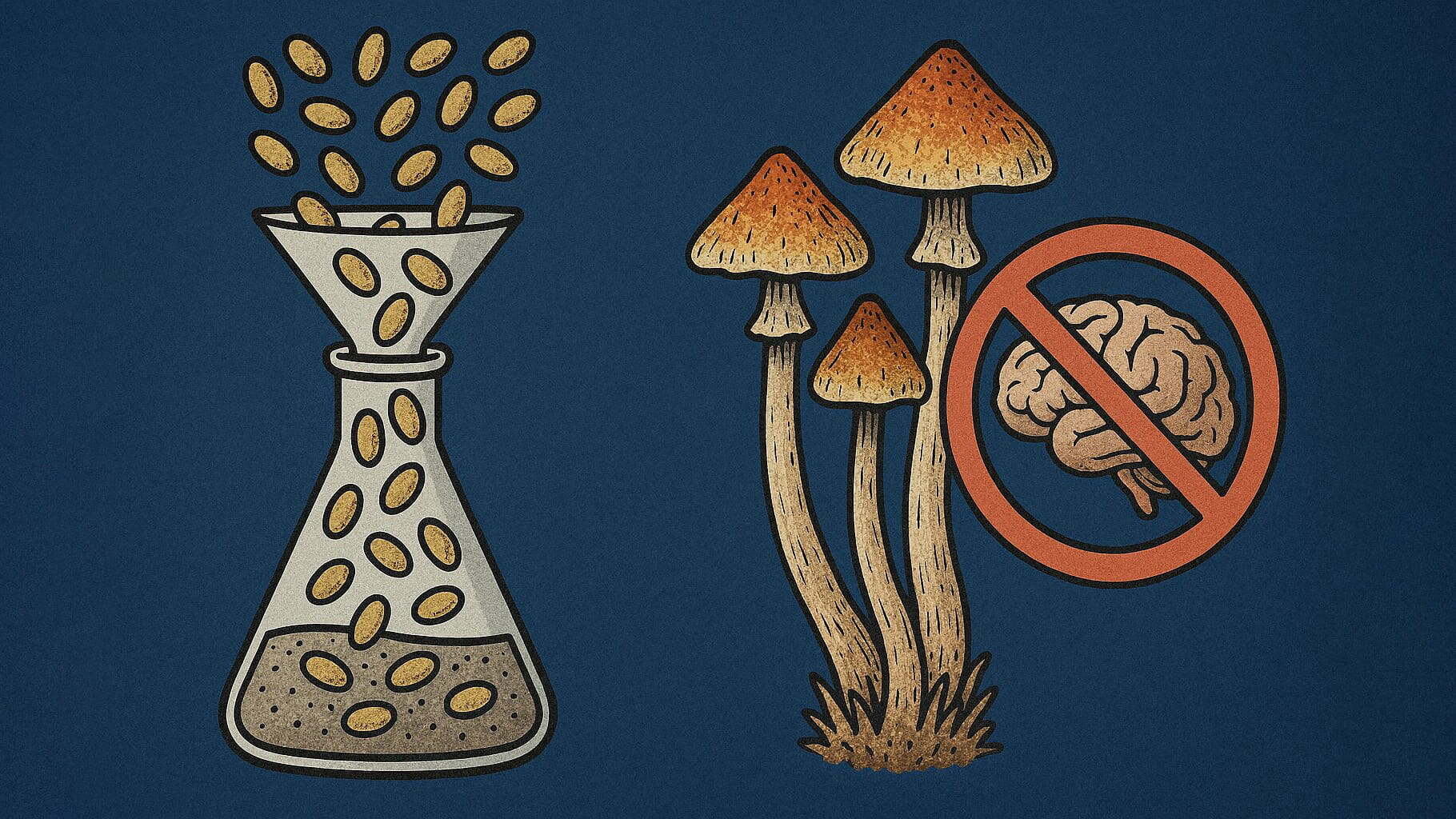
The main difference between spores and fruiting bodies lies in their chemical composition and functional purpose.
Composition and presence of active substances
- The fruiting bodies of psychoactive mushrooms contain psilocybin, which, when ingested, converts to psilocin and causes characteristic changes in perception.
- The spores do not contain psilocybin or other psychoactive compounds. Therefore, they cannot cause hallucinations or altered consciousness.
Function in nature
- Spores are reproductive cells designed for the reproduction and spread of the mycelium.
- The fruiting body is a mature structure where substances that influence the human psyche are formed.
Practical significance
- Psilocybin mushroom spores are often sold legally for mycological research, as they are not classified as narcotics.
- Fruiting bodies, on the other hand, are classified as psychoactive mushrooms and are regulated by law.
It's important to emphasize that psilocybin and the brain are directly linked—it's this substance that interacts with serotonin receptors, causing a psychedelic effect. However, since the spores lack psilocybin, they have no effect on the human nervous system.
Important!!! This article is for informational purposes only. We do not promote the use of prohibited substances.