




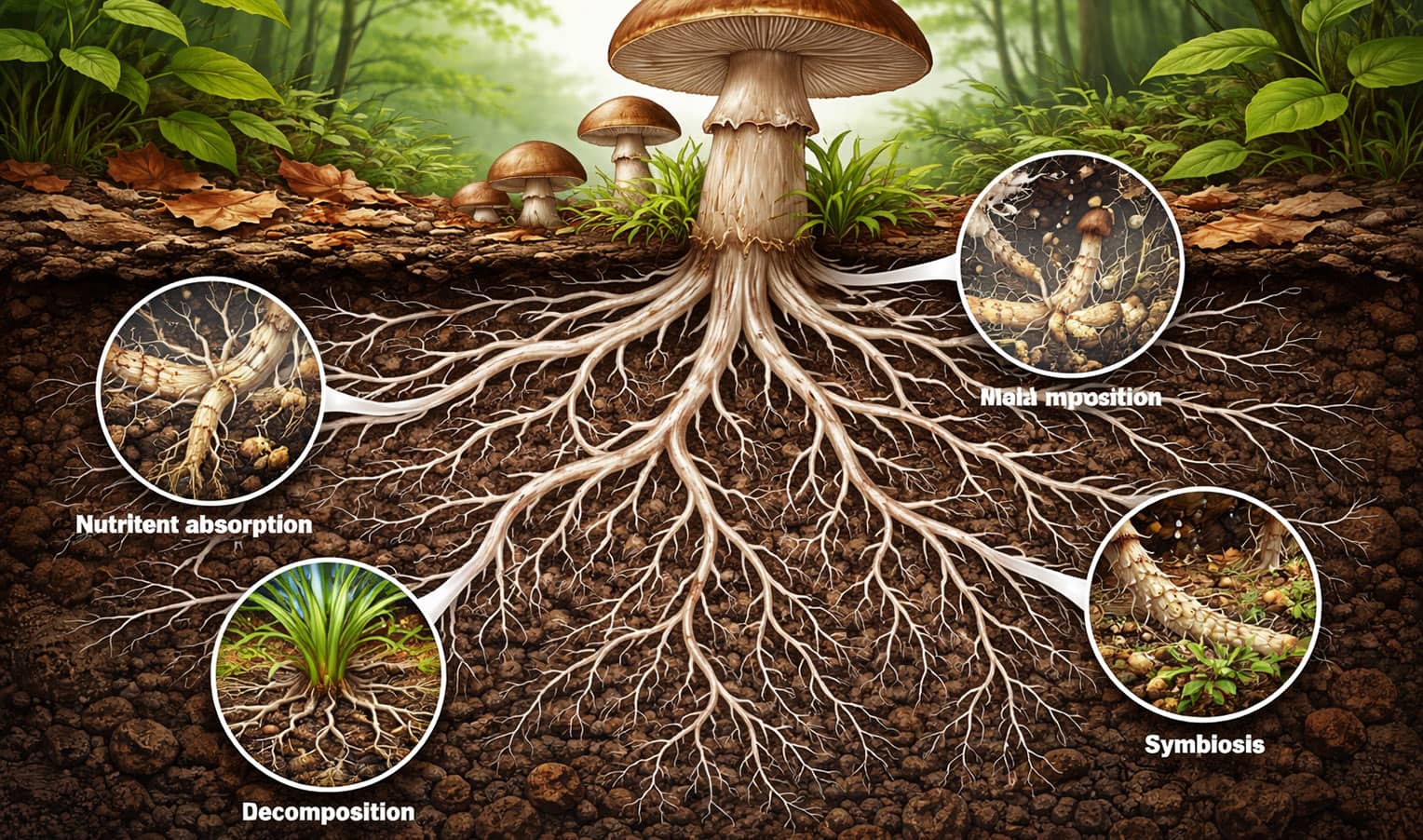
The life of any mushroom begins with mycelium—a branching invisible system with enormous biological potential. This living web is often called "roots," as it is what gives rise to the bodies of Psilocybe cubensis. Despite its hidden nature, mycelium is a complete organism that processes nutrients, forms soil ecosystems, and prepares the network for the active fruiting phase.
For mycology enthusiasts and psychedelic researchers, understanding the nature of mycelium is the foundation of knowledge about how psilocybin mushrooms develop and maintain their unique properties. In this review, we will explore the anatomy of the mycelium, its growth cycles, and its key role in cultivation. This deep dive into the hidden mechanisms of life will allow you to see the familiar image of mushrooms in a completely different way.
Structure and Anatomy of Mycelium: A Biological Definition
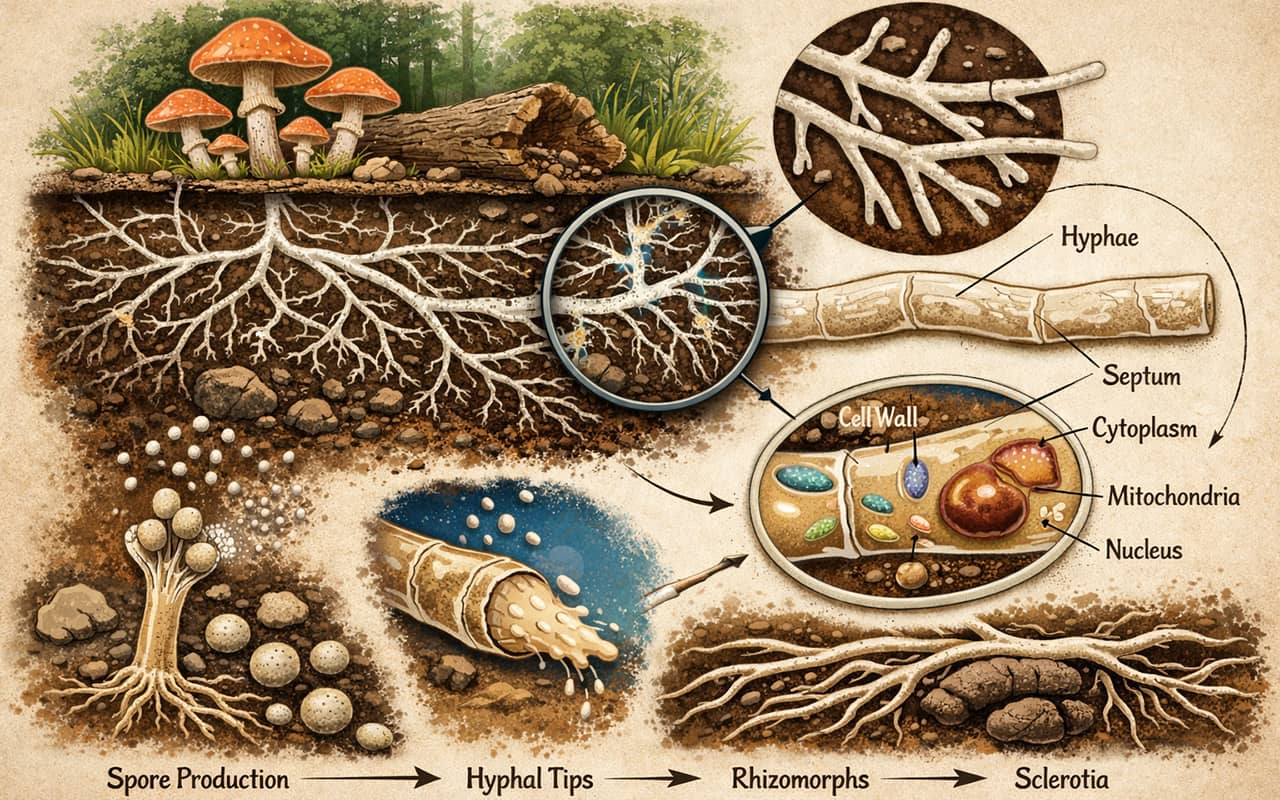
The term "mycelium" refers to a network of the finest white threads permeating a substrate. A simple analogy: if a mushroom is an apple, then the mycelium is the apple tree itself. It is a complex underground communication system that, like roots, searches for food sources, digests organic matter, and ensures nutrient exchange in the forest or home ecosystem.
In the scientific community, regarding Psilocybe cubensis, the terms "Cubensis mycelium" or "psilocybin mycelium" are used. This is the vegetative state of the mushroom, preceding the appearance of the "magic mushrooms" we are used to.
From a biological perspective, the network consists of hyphae—microscopic tubes that continuously branch and intertwine. During the growing process, it is crucial to monitor the state of this system: high-quality substrate colonization and the formation of healthy mycelium primordia determine whether your harvest will be abundant or if the attempt will fail.
What is the Difference Between Mycelium and a Fruiting Body?
Beginner growers often confuse these concepts. In fact, they are different phases of a single life cycle. Mycelium is a vegetative organ. It lives hidden inside the substrate, accumulating energy and absorbing nutrients. It is the invisible foundation without which the organism's existence is impossible. When external factors change (humidity, lighting, or temperature), the mycelium moves to reproduction.
A visible mushroom appears—the fruiting body, whose task is to spread spores. From the spores, new threads will eventually develop, closing the circle. A healthy, snow-white Cubensis network indicates readiness to transition to the final stage. Any color changes may signal contamination by pathogens. So: mycelium feeds the organism, and the mushroom is responsible for procreation.
Do Mycelium Threads Contain Psilocybin and Psychoactive Substances?
One of the most common questions is: does the mycelium itself have hallucinogenic potential? It is logical to assume that since it is the basis of the organism, psychedelic properties should be fully present. Discussions often raise the topic of the connection between mycelium and the overall level of alkaloids in the mushroom.
The reality is this: the content of active substances in the threads is extremely low. Psilocybe cubensis mycelium can produce microscopic amounts of psilocybin, but their concentration is dozens of times lower than in mature caps. The main synthesis of psychoactive alkaloids is triggered precisely at the stage of fruiting body formation and growth.
Consequently, consuming raw mycelium does not produce a significant effect. It serves only as a biological reactor, converting nutrition into necessary chemical compounds. Nevertheless, working with it is a fascinating process. Using ready-to-grow kits, you can observe how the white web gradually transforms into a powerful tool for understanding nature.
Technology and Growth Conditions: How Does the Mycelium Develop?
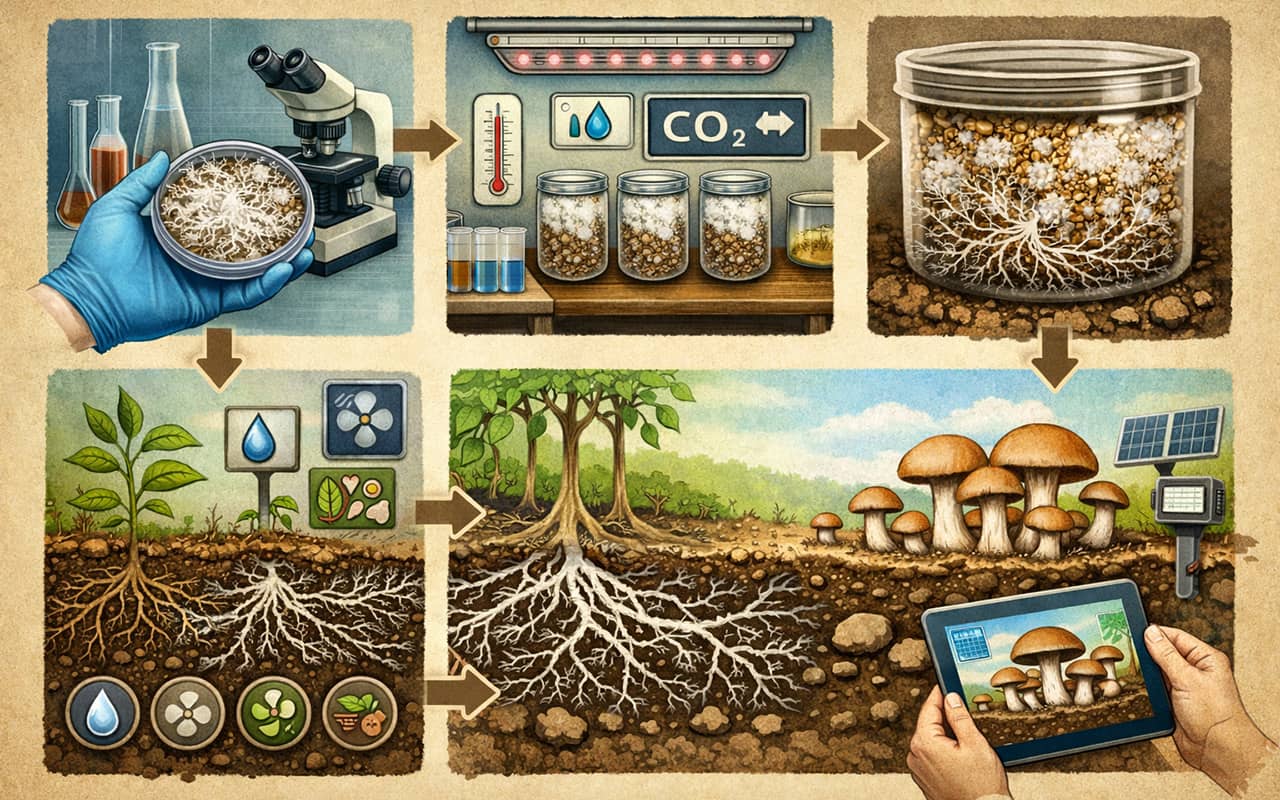
Mycelium development is a complex biochemical process. After germination, spores release hyphae that seize organic matter, forming a noticeable white network. For successful colonization at home, warmth (24–28 °C) and moderate humidity with stable gas exchange are required. With an oxygen deficit, "aerial mycelium" may appear—it grows upwards in fluffy clumps. Conversely, excess water causes fermentation and the death of the mycelium.
The choice of substrate (coconut, grain, brown rice flour) strongly influences the growth character. Two forms of structure are distinguished:
- Rhizomorphic mycelium—dense, root-like strands, a sign of strong genetics.
- Tomentose (fluffy) mycelium—a cotton-like, soft structure. To achieve the best results, it is important to use the correct casing layer, which will create the ideal microclimate for the transition to fruiting.
Primordia and Pinheads: The Process of Fruiting Body Formation
When the substrate is fully colonized by threads, it is time for the appearance of primordia—tiny white nodules. This is a critical moment when the hidden network turns into visible mushrooms. External shocks serve as a signal to trigger this process: a drop in temperature, access to light, and increased ventilation. At this moment, the organism's energy is redirected from expanding territory to creating offspring.
The mycelium's readiness for this phase is easily determined by a smooth, dense white coating on the surface. If you notice tiny "pinheads," it's time to increase humidity to 90% and ensure fresh air exchange. In just a few days, these nodules will turn into full-fledged mushrooms ready for harvest.
Growing Psilocybin Mushroom Mycelium at Home
Home cultivation has become accessible thanks to modern technology. Ready-made kits already contain colonized substrate, which saves the beginner from the risk of contamination in the early stages.
A brief algorithm of actions:
- Sterility and place: Choose a clean space with a temperature of around 24 °C.
- Activation: Follow the kit instructions (usually requires hydration) to start the process.
- Waiting for pins: Soon white primordia will appear—harbingers of the future harvest.
- Fruiting: Provide light and oxygen access. In a week, you will see the first fruits of your labor.
Nutritional Value and Safety: Can You Eat Mycelium?
Many are interested in the safety of consuming mycelium. The answer is yes, but with a caveat: it will not bring a psychedelic experience. There is too little psilocybin in it to activate consciousness. However, the mycelium of other mushrooms (e.g., Lion's Mane or Reishi) is actively used as a superfood. It is rich in beta-glucans and antioxidants that support the brain and immunity. In the case of hallucinogenic species, working with mycelium is primarily the art of cultivation. It allows one to understand the full development cycle of the Psilocybe genus. The magic lies not in eating the "white web," but in the ability to grow full-fledged fruiting bodies from it, carrying the true potential.
Summary: From an Invisible Network to a Magic Mushroom Harvest
The journey from the first thread of hypha to an open cap is a great mystery of nature. Mycelium acts as the foundation, nourishing and supporting the life of Psilocybe cubensis. Understanding its structure is the key to success for any mycologist. Home growing offers a unique chance to see this transformation with your own eyes. Working with a living network binds together science and natural intuition. The mycelium only needs the right conditions to reveal the power hidden within it. Give it those conditions—and nature will reciprocate.