




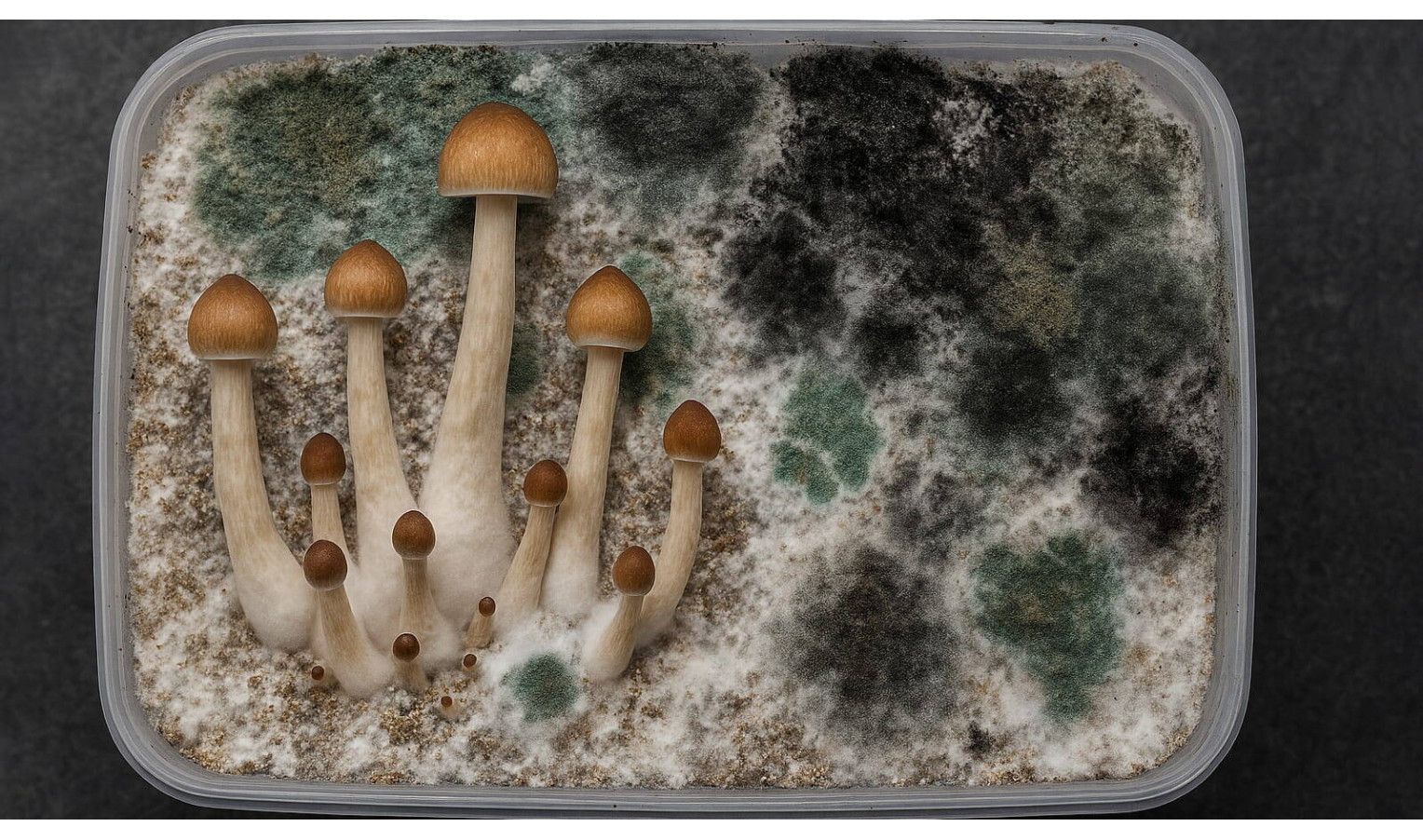
Growing psilocybin mushrooms is a process that requires extreme care and strict adherence to sterile conditions. The main threat to mushroom growers is contamination, which occurs when foreign microorganisms enter the substrate. Even the slightest errors in preparing the medium or using tools can lead to mycelial contamination and a complete loss of the harvest.
Mushroom Contamination: Nature and Danger
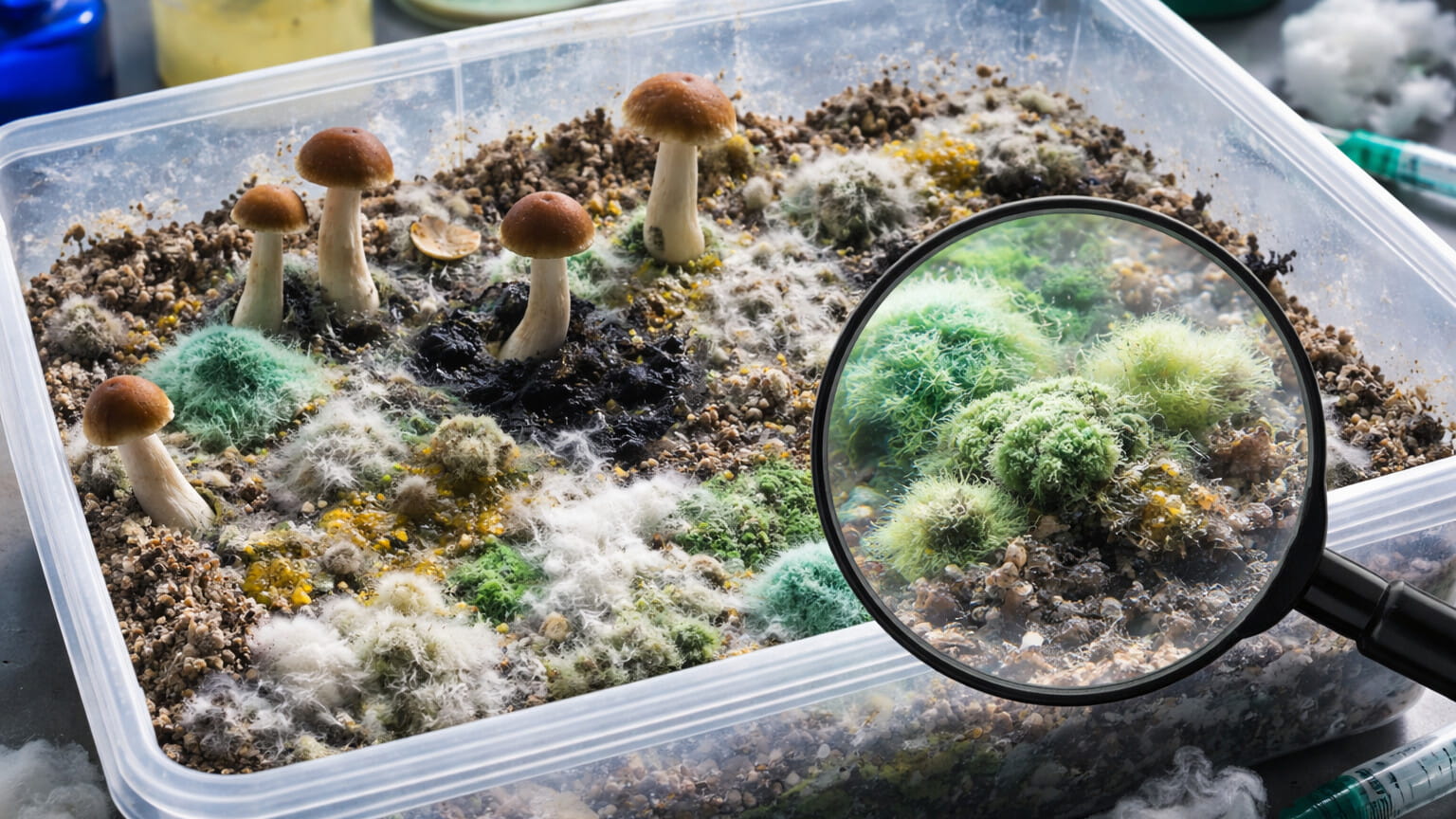
Mushroom contamination isn't just a technical problem; it's the main enemy of any mushroom grower. When growing psilocybin mushrooms, contamination of the mycelium by foreign microorganisms can completely halt the colony's development. Bacteria and mold spores begin to actively multiply in the substrate, crowding out the psilocybin mushroom mycelium and depriving it of access to nutrients.
It's especially important to understand how psilocybin mushroom spores differ from those of other mushrooms . They are more sensitive to external conditions and require strict sterility during germination. If competing microorganisms are present in the environment, psilocybin mushroom spores lose their chance of successful development. Unlike more aggressive mold species, their growth is slower, so any error in substrate preparation or disruption of sterile conditions will result in the mold taking over the space first.
Thus, contamination is not an accident, but a natural result of poor hygiene and errors when handling mushroom substrate. This is why proper mycelial contamination prevention should be a priority in mushroom growing.
Substrate sterilization: the key to success
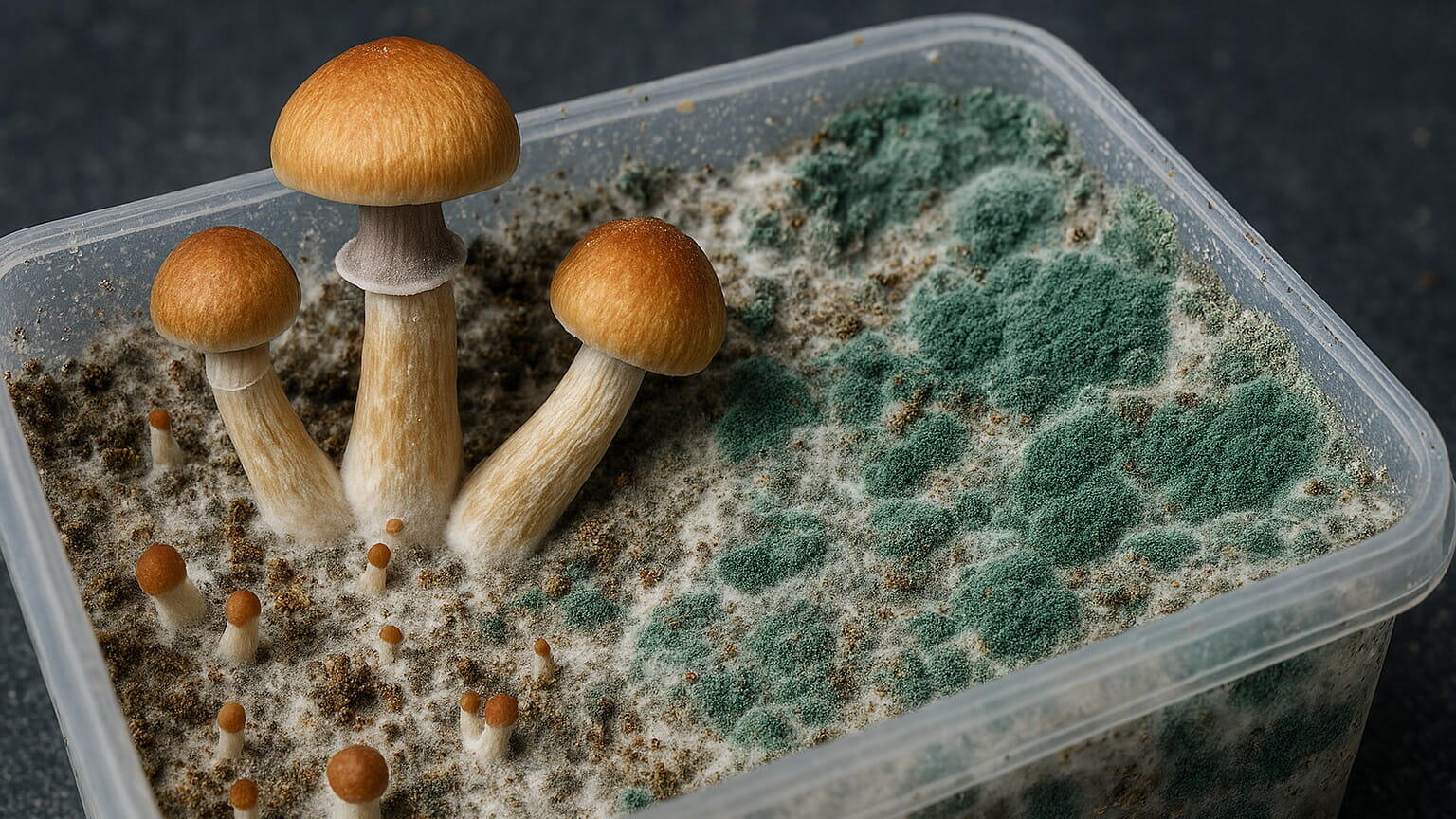
Substrate sterilization is a fundamental step in mushroom cultivation, directly affecting the health of psilocybin mushroom mycelium. If the substrate is improperly treated, it becomes an ideal breeding ground for bacteria and mold, leading to mycelial contamination and complete harvest loss.
To understand the importance of this process, let's look at it step by step:
- Removal of microorganisms
Sterilization destroys mold spores and bacteria that can compete with the mycelium. Without this step, mushroom contamination is virtually inevitable. - Creating sterile conditions
After treatment, the substrate must remain protected from external contaminants. Any disturbance—opening a jar or using dirty tools—leads to reinfection. - Comparison of hobby and laboratory growing methods
In amateur settings, a pressure cooker or steam treatment is often used, which reduces the risk but does not guarantee complete sterility.
Laboratories use autoclaves and laminar flow cabinets, where sterility is almost absolute. This is why laboratory methods are considered the standard, while amateur methods are a compromise.
Thus, substrate sterilization is not just a technical procedure, but a strategic step that determines whether the mushroom substrate will be a breeding ground for psilocybin mushrooms or a breeding ground for mold.
Growing mistakes and their consequences
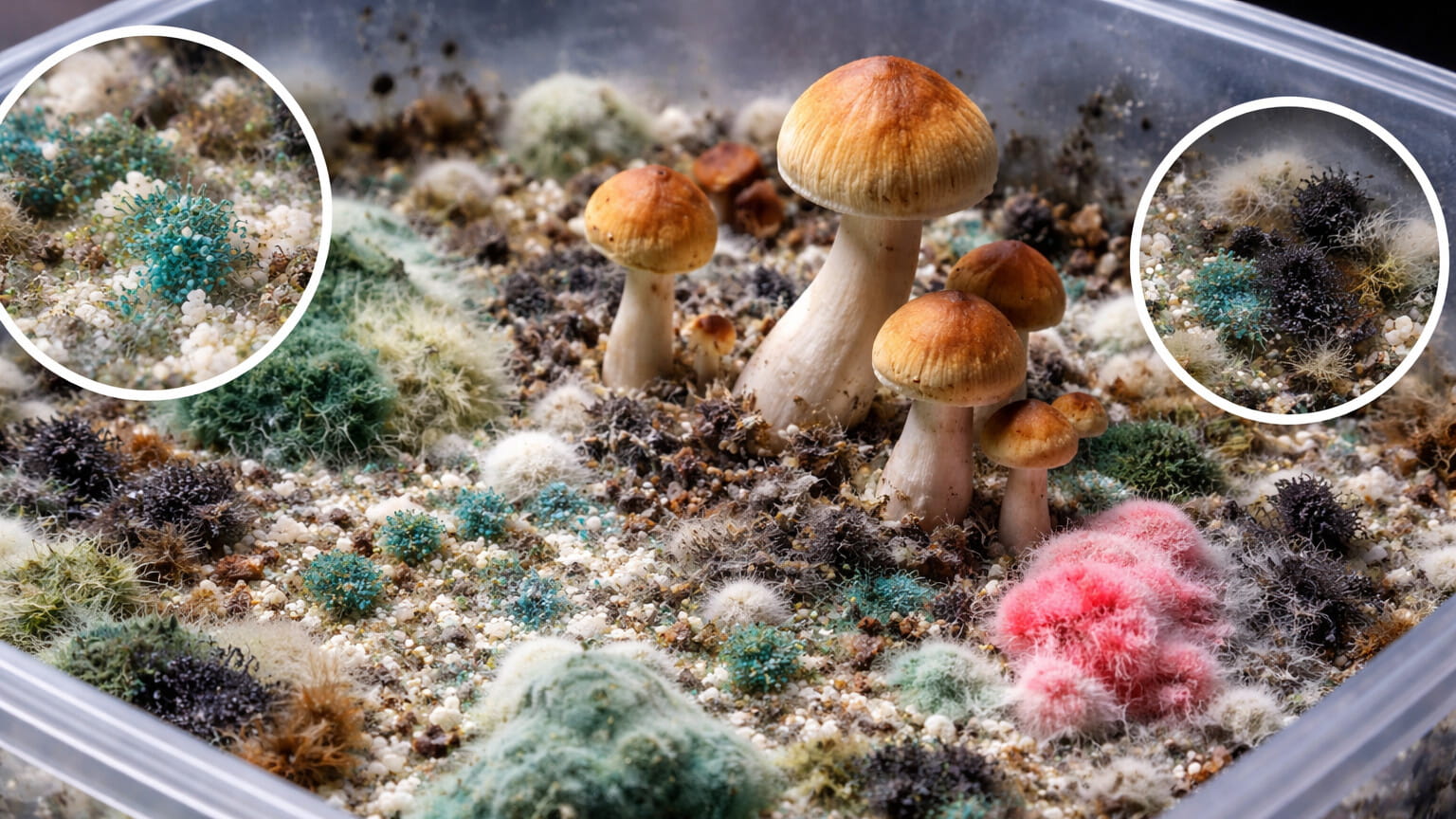
Even with high-quality substrate sterilization, mushroom growers can make mistakes that open the door to contamination. It's important to understand that mistakes in mushroom cultivation are most often related not to technique, but to inattention to detail.
Violation of sterile conditions
Working without gloves or a mask, or using poorly cleaned tools, introduces bacteria and mold spores into the substrate. This results in mycelial contamination, resulting in crop loss.
Temperature errors
Temperatures that are too high or too low stimulate the growth of competing microorganisms. Under such conditions, psilocybin mushroom mycelium develops more slowly, giving mold an advantage.
Misunderstanding of mycelial nutrition
Many novice mushroom growers ask, "Do psilocybin mushrooms need feeding during growth?" In fact, no additional nutrition is required—all the necessary resources are already present in the mushroom substrate. Attempts to add additional nutrition only increase the risk of contamination, as they create a favorable environment for bacteria and mold.
Thus, even minor errors can turn a sterile substrate into a breeding ground for infection. To avoid problems, mushroom growers must strictly monitor cleanliness, temperature, and cultivation techniques, as discipline is essential for successful cultivation.
Important!!! This article is for informational purposes only. We do not promote the use of prohibited substances.