




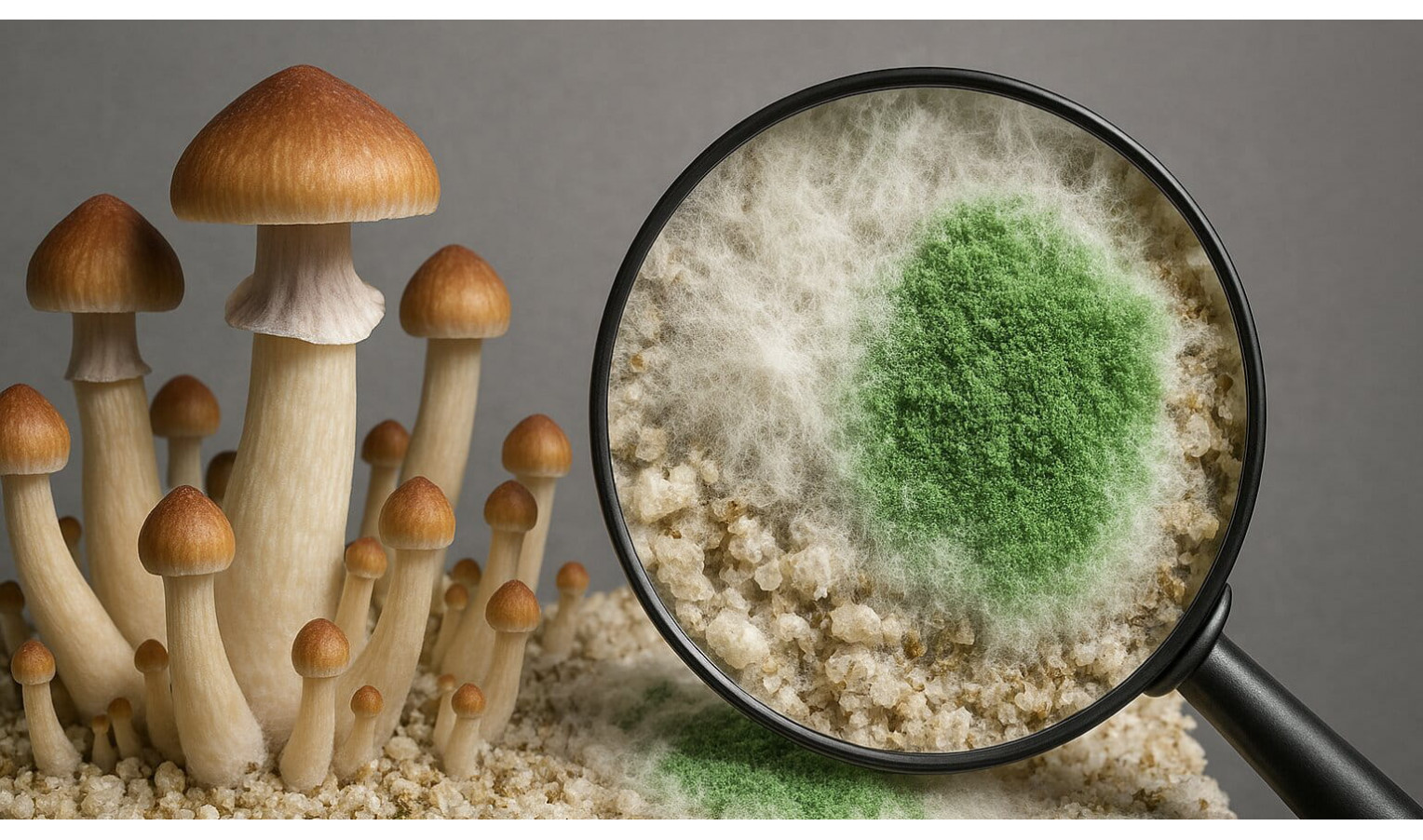
Mushroom growing is a delicate process, where success depends directly on sterility and the right conditions. But even experienced cultivators face a dangerous enemy: Trichoderma, an aggressive mold capable of destroying an entire harvest.
External signs of Trichoderma
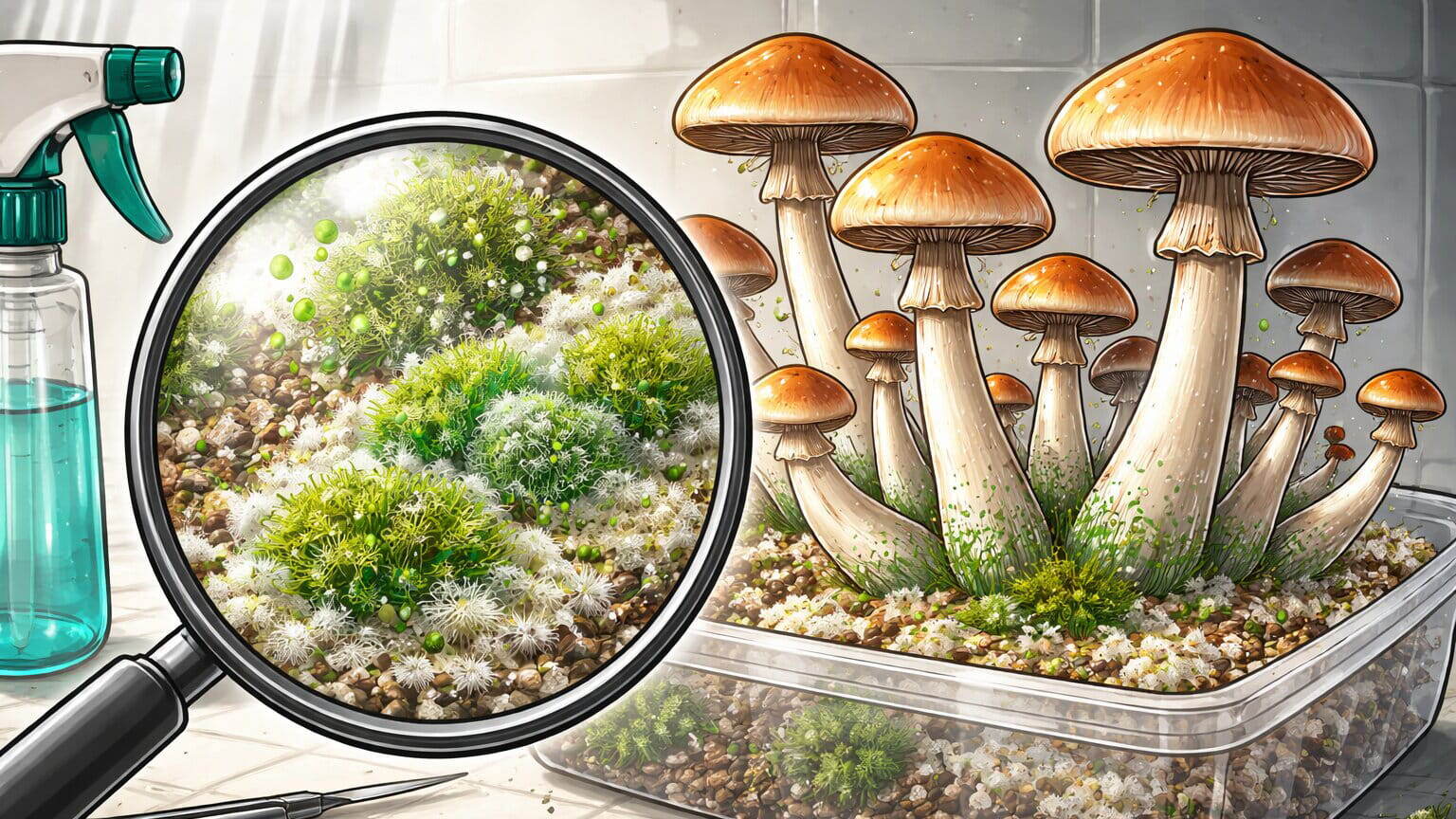
When growing psilocybin mushrooms, mushroom growers often encounter a problem: the appearance of Trichoderma mold. In the early stages of infection, the mushroom mycelium appears healthy: white, fluffy, and uniform. However, characteristic signs soon appear:
- The appearance of bright green spots on the surface of the substrate.
- Loose structure of infected areas, different from dense and homogeneous mycelium.
- An unpleasant odor that indicates contamination of the substrate.
It's important to understand that the development of Trichoderma is associated not only with impaired sterility but also with the composition of the medium. For example, the role of gypsum and minerals in the substrate is to stabilize the acidity and improve the structure of the material. If this balance is disrupted, the risk of mycelial infection increases.
Thus, Trichoderma can be recognized by a combination of visual and organoleptic signs: green mold on mushrooms, changes in texture and odor. The sooner a mushroom grower notices these symptoms, the greater the chance of preventing the spread of the infection.
Causes and mechanisms of infection
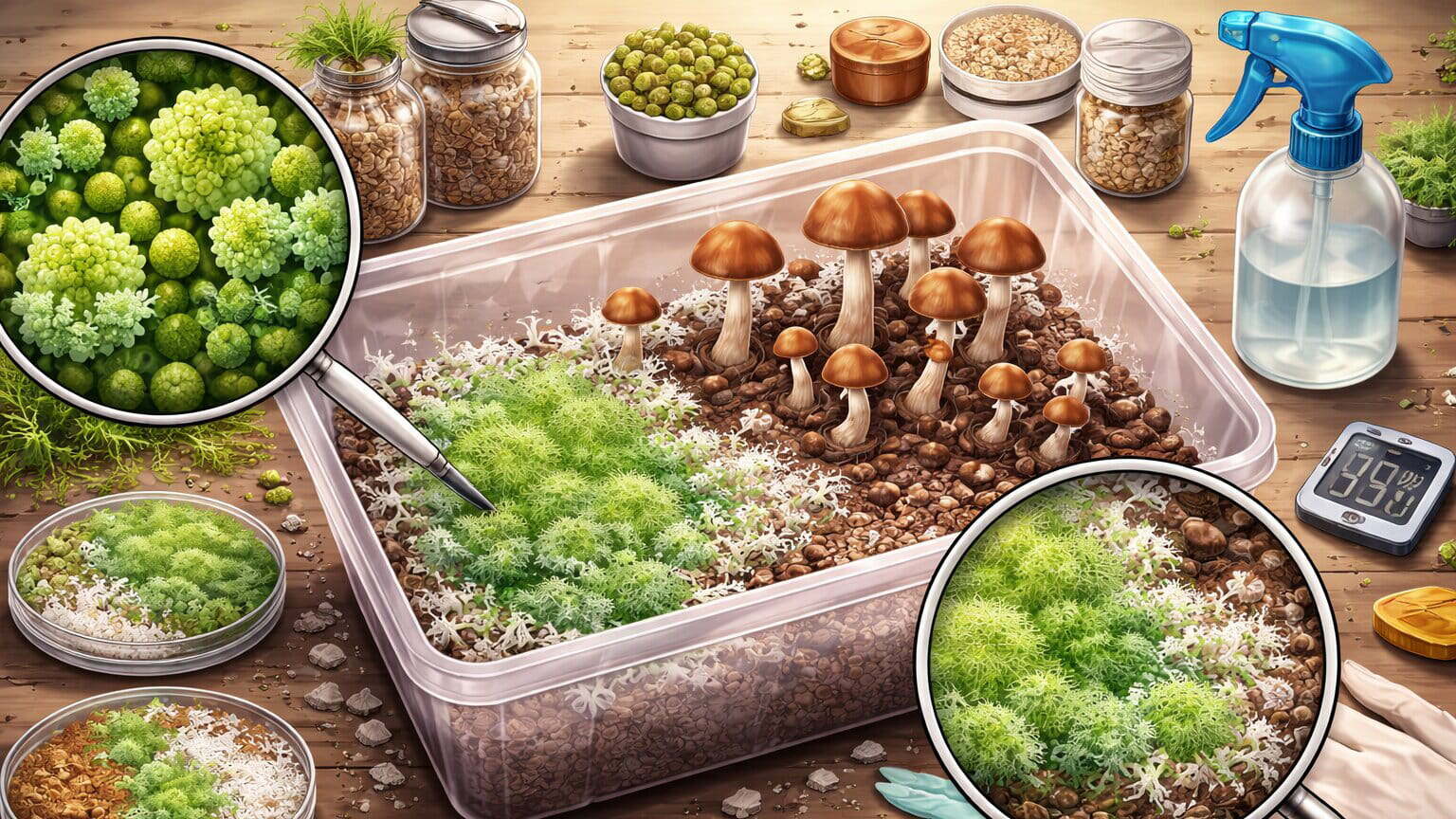
The development of Trichoderma mold in the substrate is associated with a number of factors. The main problem for mushroom growers is contamination, which can occur both during substrate preparation and during mycelial incubation.
To understand the infection mechanism, let's look at the key points:
- Insufficient sterilization of the substrate
If the substrate for the mushrooms has not undergone high-quality pasteurization or sterilization, Trichoderma spores remain and begin to actively develop. - Infection of mycelium during work
A breach of sterility during transfer or inoculation results in the introduction of mold spores into the nutrient medium. This is one of the most common causes of substrate contamination. - Incorrect growing conditions
High humidity, poor ventilation, and high temperatures create ideal conditions for Trichoderma growth. Fungal infections spread especially quickly under such conditions. - Weak immunity of mycelium
If mushroom mycelium develops slowly or is weakened, it is unable to compete with aggressive mold. As a result, mushroom diseases become inevitable.
Thus, Trichoderma is the result of a combination of factors, with contamination playing a key role. Understanding these mechanisms helps mushroom growers identify the problem early and minimize the risk of infection.
How to recognize Trichoderma in time
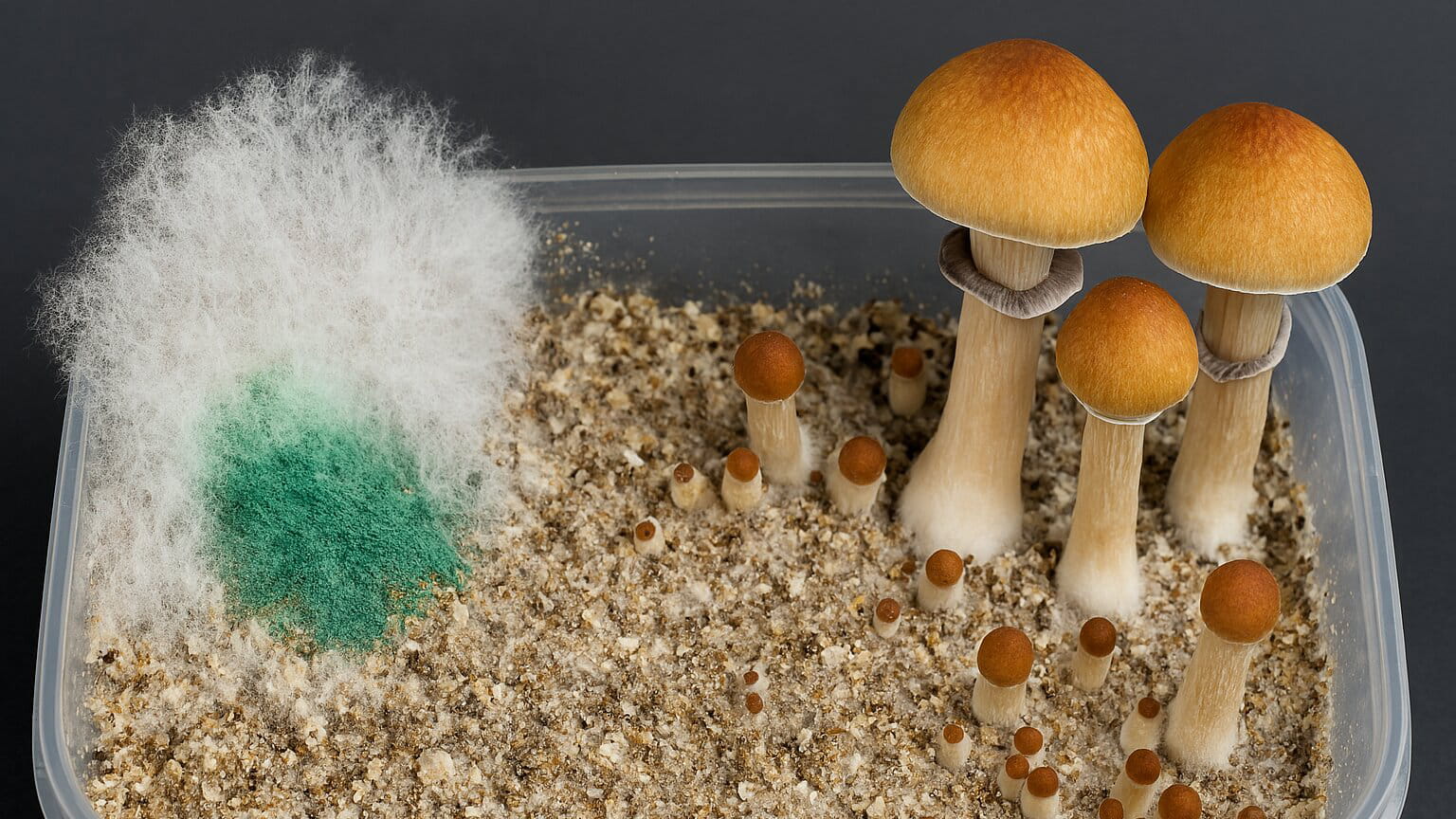
To protect a mushroom grower's crop from Trichoderma contamination, it is important not only to monitor the substrate but also to understand the conditions under which mold develops.
- Regular visual inspection
Inspect the surface of the mushroom substrate: the first signs of infection appear as white areas that quickly turn into bright green spots. - Organoleptic characteristics
An infected block may emit an unpleasant odor, and the mycelium structure becomes loose and uneven. - Control of the growing environment
Temperature and humidity are key for psilocybin mushrooms. If the conditions are outside the optimal range, the risk of mold growth increases dramatically. Excessive humidity and stagnant air create ideal conditions for Trichoderma spores. - Sterility of the work process
Any violation of sterility during reseeding or inoculation increases the likelihood of contamination of the fungal mycelium.
Thus, early detection of Trichoderma requires a combination of careful observation and strict control of growing conditions. The sooner a mushroom grower notices the first signs, the greater the chance of preserving healthy substrate and preventing the spread of infection.
Important!!! This article is for informational purposes only. We do not promote the use of prohibited substances.