




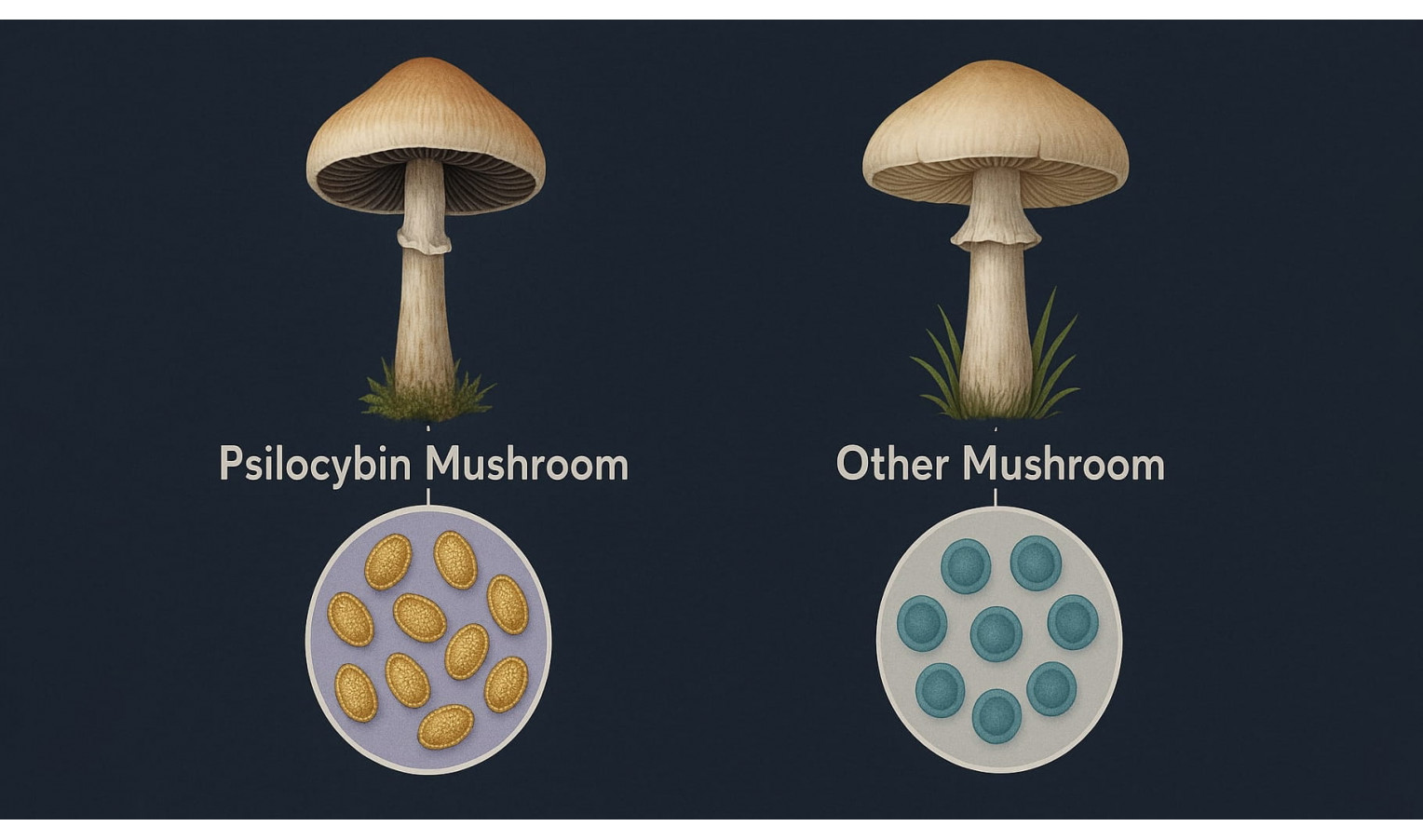
Fungal spores are the basis for their reproduction and survival in nature, playing a key role in biology and mycology. Of particular interest are the spores of psilocybin mushrooms, which differ in morphology, structure, and legal status, making them a popular subject for scientific research and collection.
Morphology and structure of fungal spores
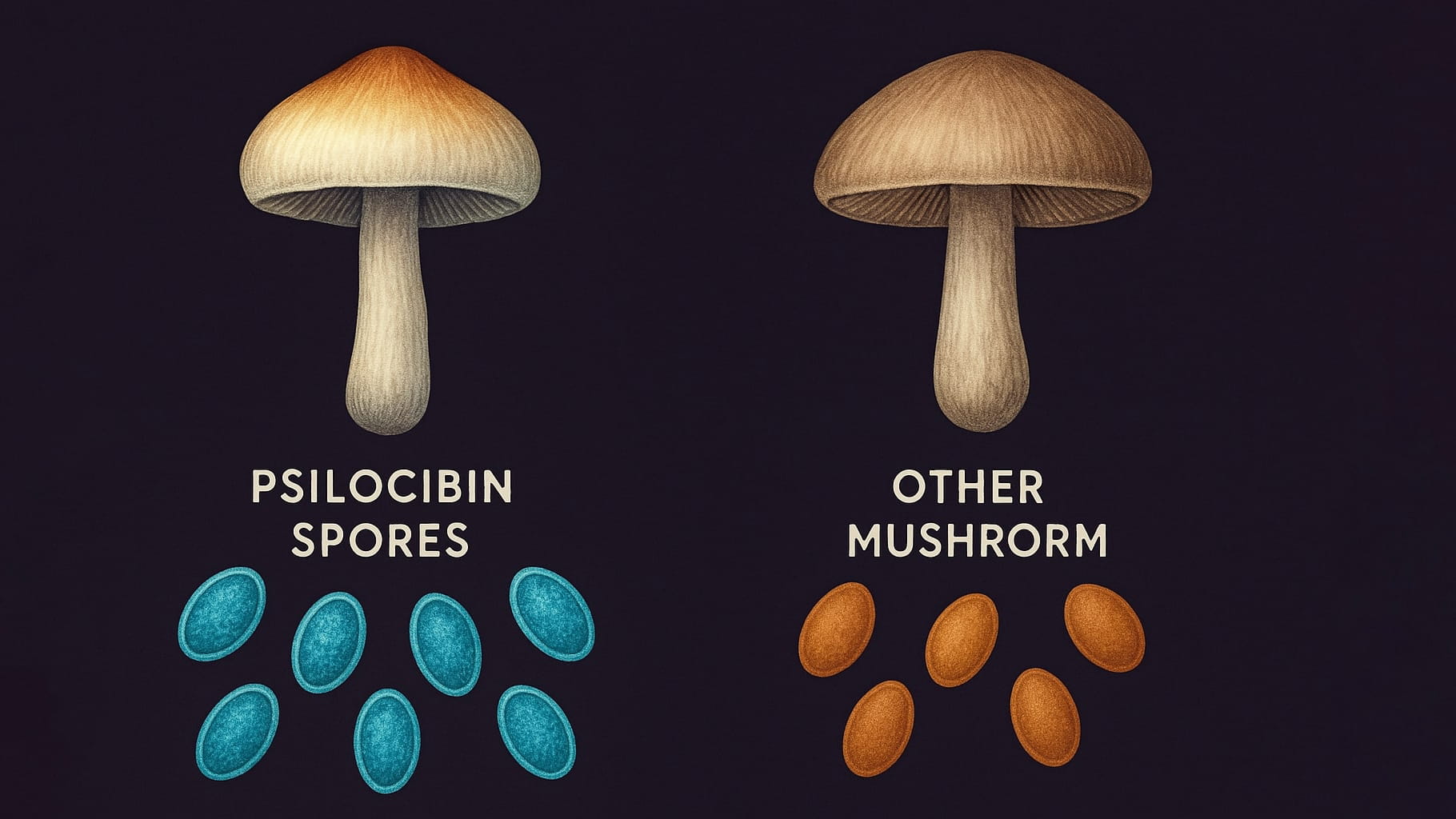
Fungal spores are the reproductive cells of fungi, enabling their reproduction and dissemination in nature. They can vary in shape, size, shell thickness, and the presence of pigment. The morphology of fungal spores plays a key role in the classification of species and in understanding their biology.
Psilocybin mushroom spores have a number of characteristics:
- The structure of the fungal spores of these species is distinguished by a denser shell, which protects the internal contents from adverse factors.
- The pigmented spore coat makes them more visible under a microscope and allows them to be distinguished from the spores of other fungi.
- In fungal spore biology, it is precisely these morphological differences that help researchers identify the unique properties of psilocybin species.
Interestingly, a comparison of amateur and laboratory methods for studying spores reveals varying levels of accuracy. Amateur microscopes allow one to see the basic outline and color of spores, but analyzing the fine structure and identifying the differences between mushroom spores requires laboratory methods using professional equipment. These methods make it possible to thoroughly study the morphology and confirm the unique characteristics of psilocybin mushroom spores.
Thus, the morphology of fungal spores is not just external characteristics, but an entire system of biological markers that allows us to distinguish psilocybin mushroom spores from those of other species and to better understand their role in fungal reproduction by spores.
Biology and reproduction of fungi by spores
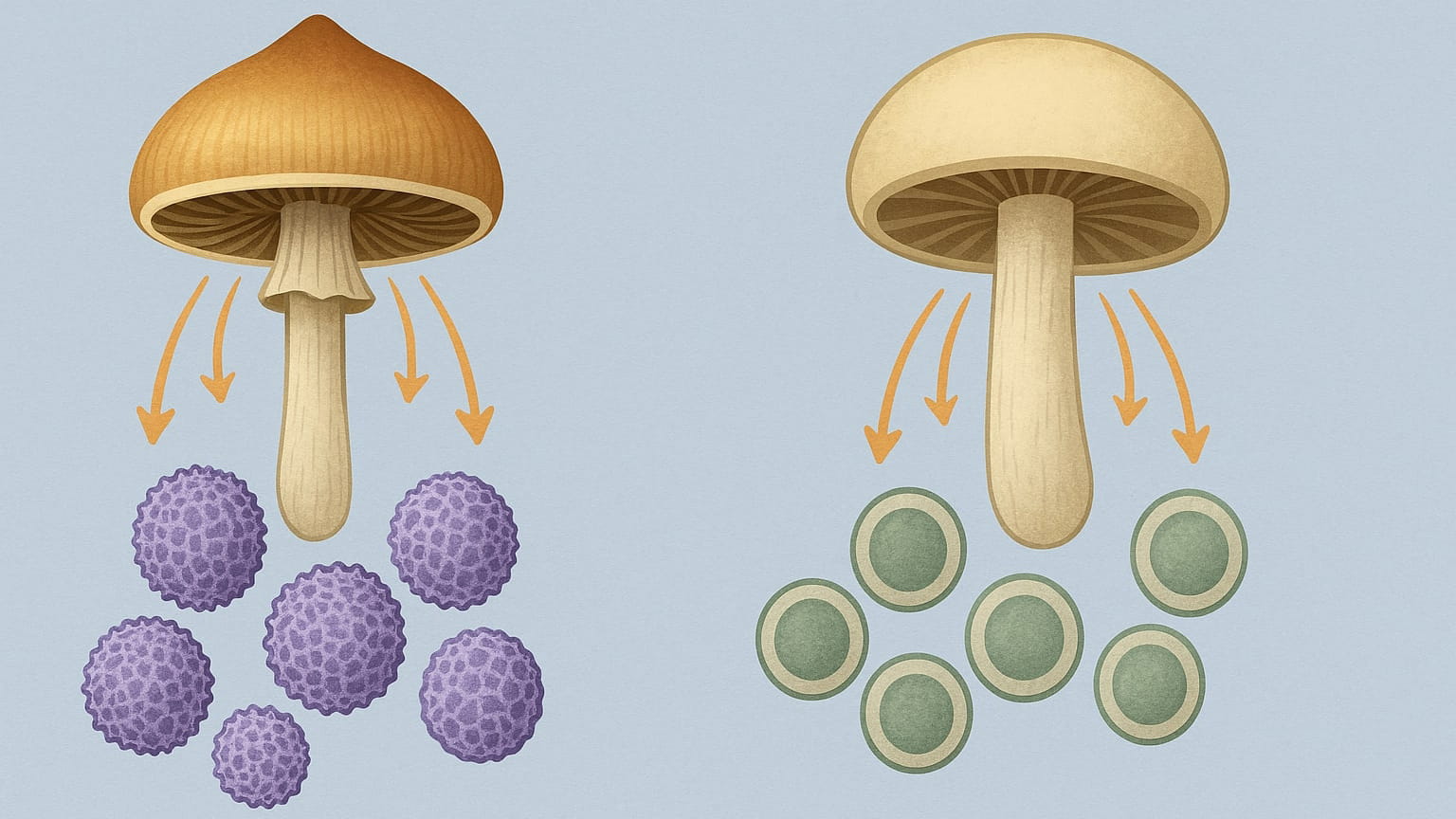
Fungal reproduction by spores is a universal biological mechanism that allows fungi to spread and form new colonies. Fungal spores are naturally carried by wind, water, or animals, and then germinate, forming mycelium. However, psilocybin mushroom spores have several characteristics that distinguish them from those of other species.
Key points:
- Spore stability
Psilocybin mushroom spores exhibit increased resistance to temperature and humidity changes. This allows them to remain viable longer than many other mushrooms. - Biochemical markers
In the biology of mushroom spores, psilocybin species are the ones that exhibit unique biochemical markers associated with psilocybin spores. These markers do not contain psychoactive substances, but serve as an indicator of species membership. - Germination conditions
The development of mycelium from spores requires specific conditions: stable humidity, temperature, and the right substrate. Unlike regular mushrooms, psilocybin species are more sensitive to environmental parameters. Lighting plays a crucial role in growing magic mushrooms, affecting the rate of fruiting body formation and the stability of mycelium development.
Thus, the differences between psilocybin mushroom spores lie not only in their morphology but also in their biological reproductive characteristics. A comparison of mushroom spores reveals that these species possess more specialized survival mechanisms and require a careful approach during study and cultivation.
Legality, collection and practical application
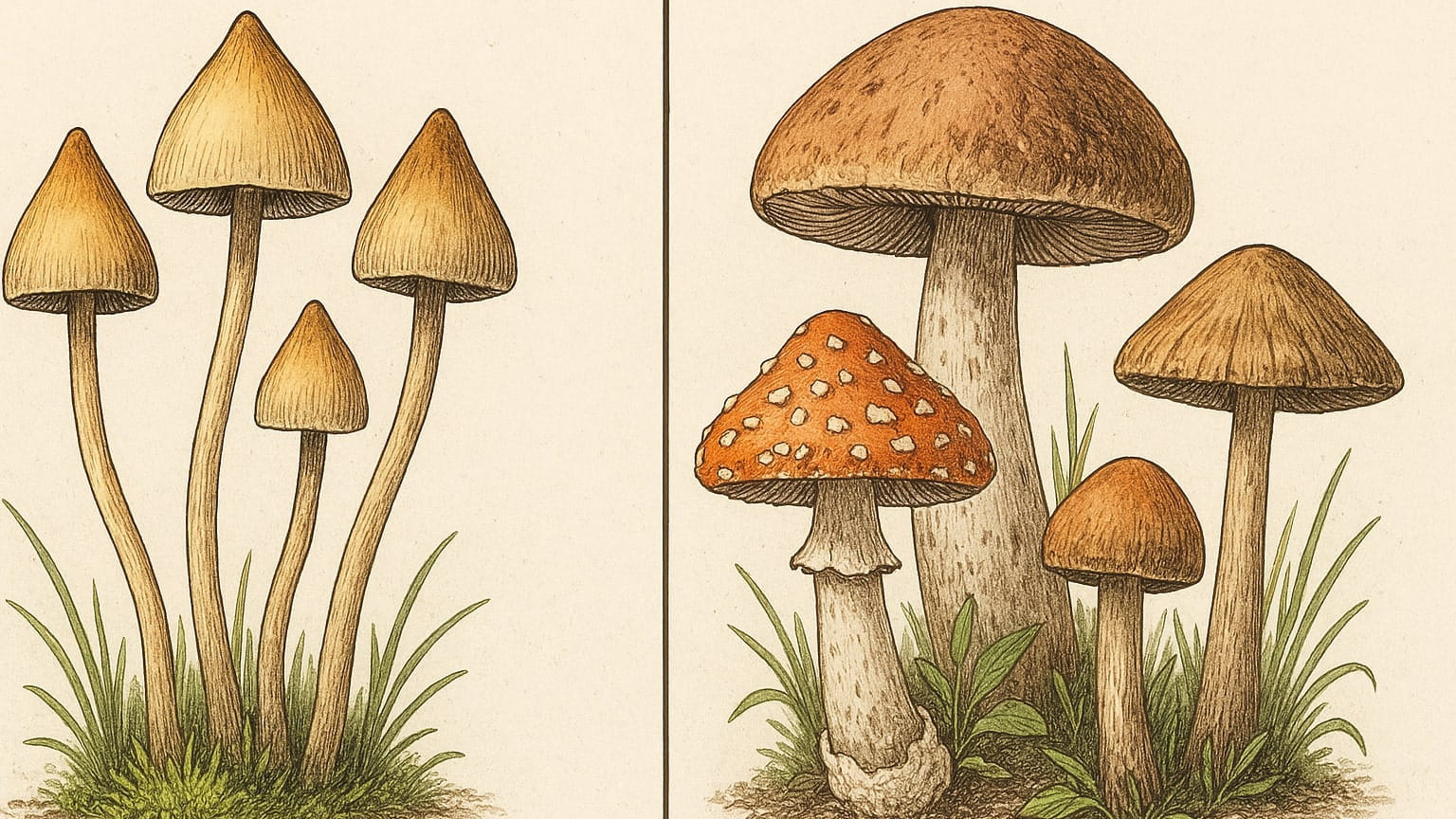
Mushroom spores occupy a special place in mycology and mushroom collecting. They are used to study the morphology of mushrooms, the biology of mushrooms, and the characteristics of mushroom reproduction via spores. Psilocybin mushroom spores, however, have a dual status: they do not contain psychoactive substances themselves, but their use for cultivation is regulated by law.
Several aspects are important for researchers and collectors:
- Legality and restrictions
In most countries, mushroom spores can be legally acquired for collection, but the cultivation of psilocybin mushrooms from spores is subject to strict legal regulations. Psilocybin mushroom spores are unique in that they straddle the line between scientific interest and legal restrictions. - Practical application in microscopy
Microscopy of fungal spores allows us to study their structure and identify unique characteristics. This is especially important for psilocybin species, as the morphology of fungal spores helps distinguish them from other species. - Preparation and sterility
When working with collection specimens or in laboratory conditions, sterilization of substrates is essential to prevent contamination by foreign microorganisms. This is necessary not only for cultivation but also to maintain the integrity of scientific research.
Thus, psilocybin mushroom spores differ from those of other mushrooms not only in morphology and biology, but also in their legal status. They are valuable for science and collection, but require strict adherence to regulations, particularly regarding legality and sterility.
Important!!! This article is for informational purposes only. We do not promote the use of prohibited substances.